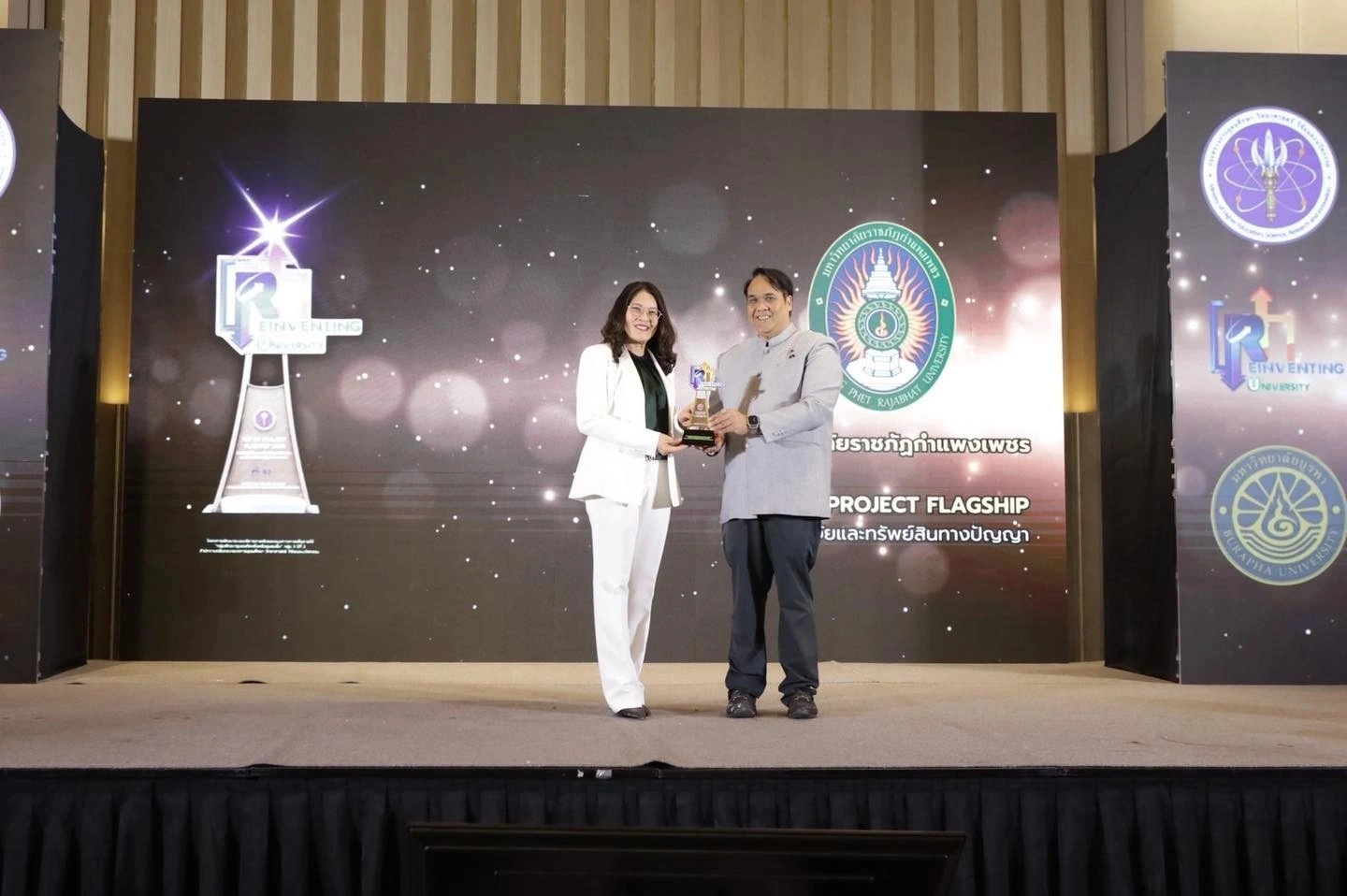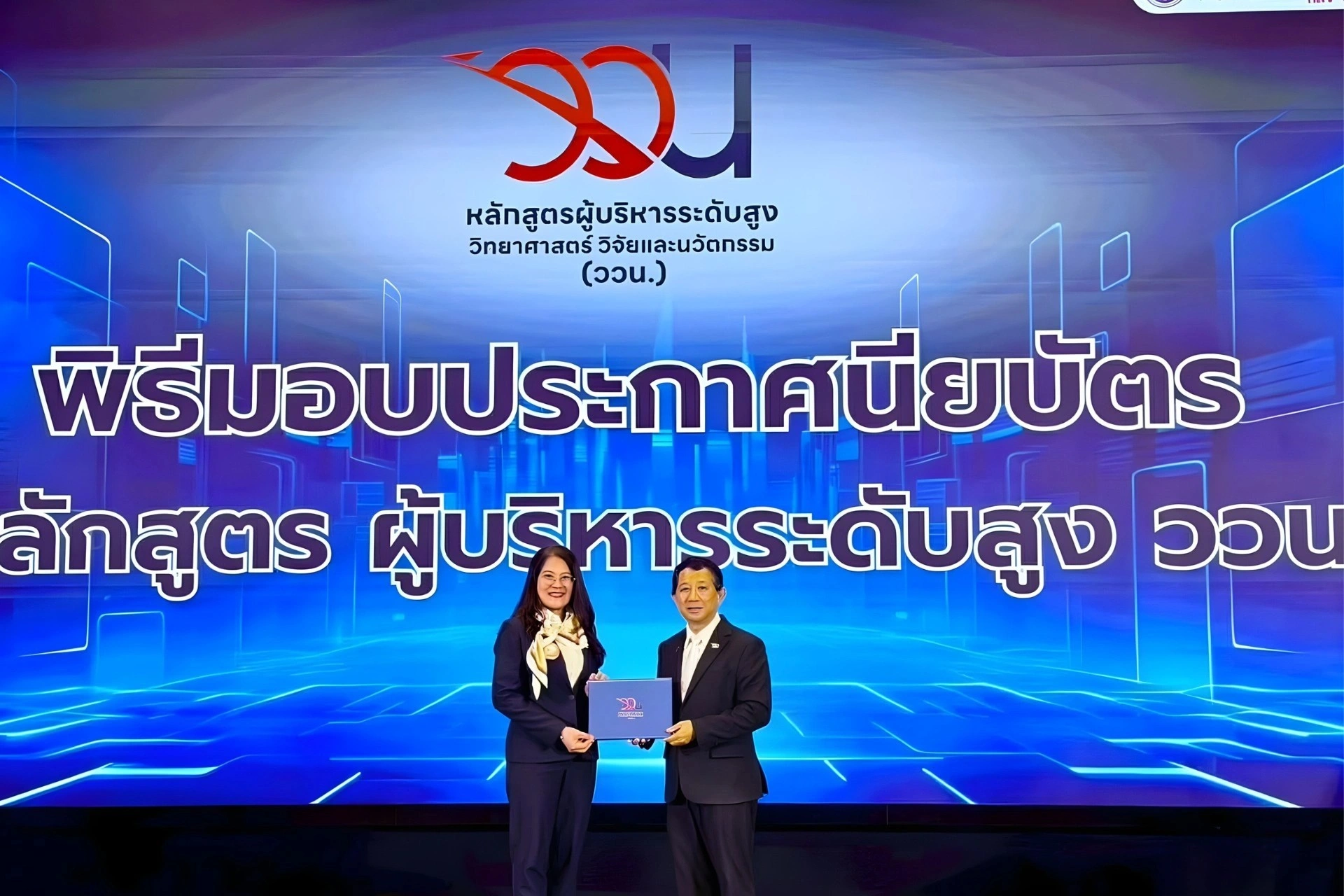
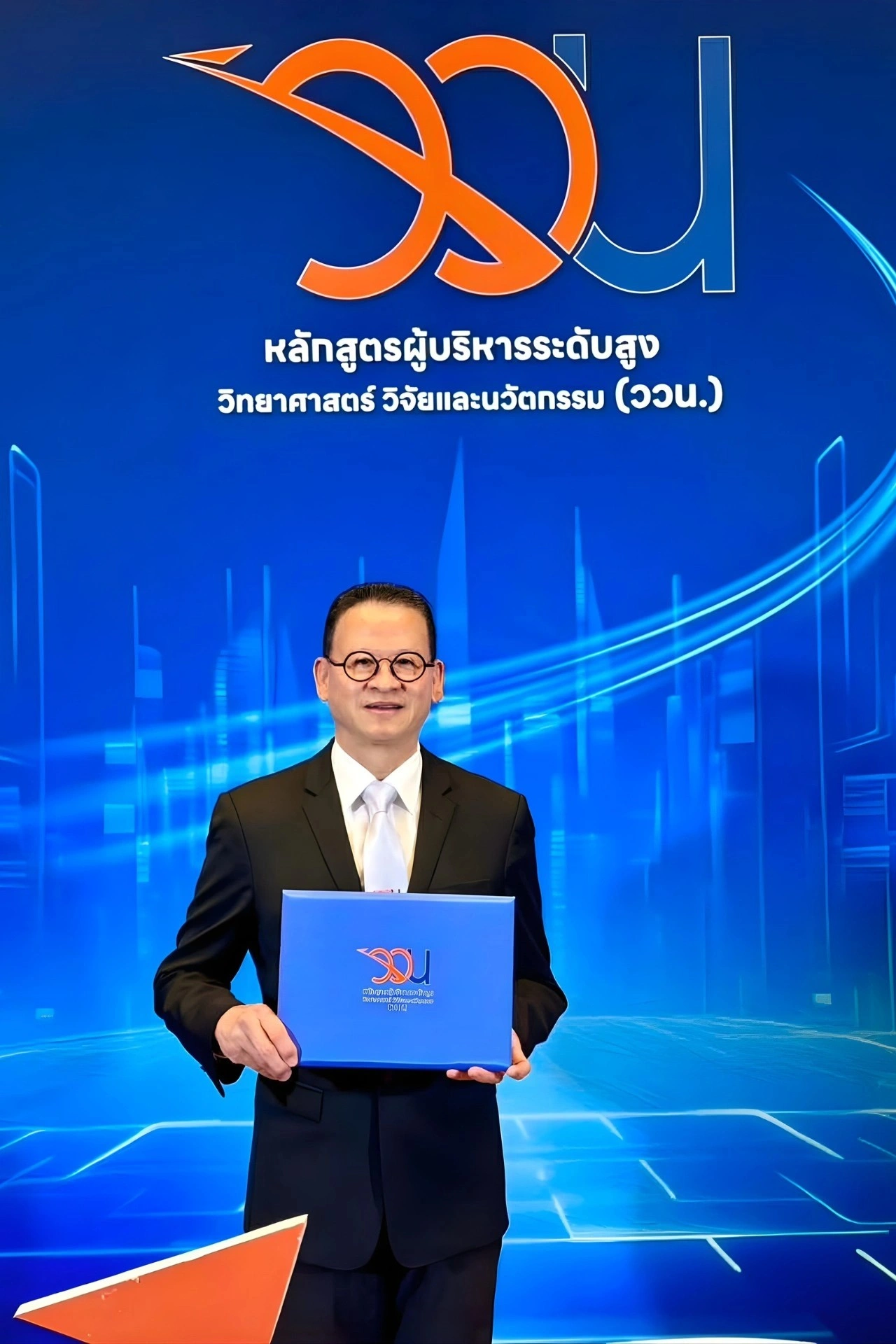
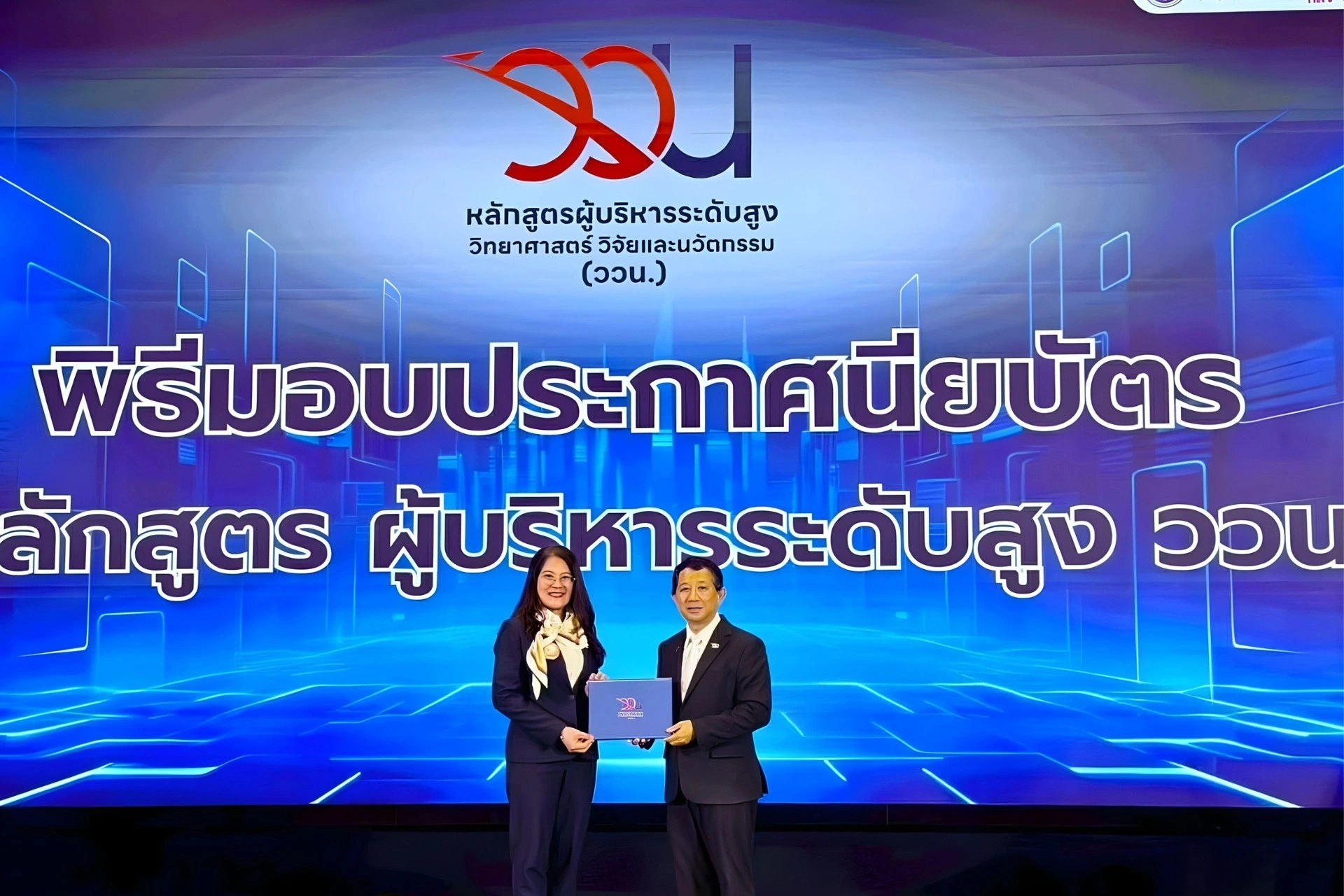
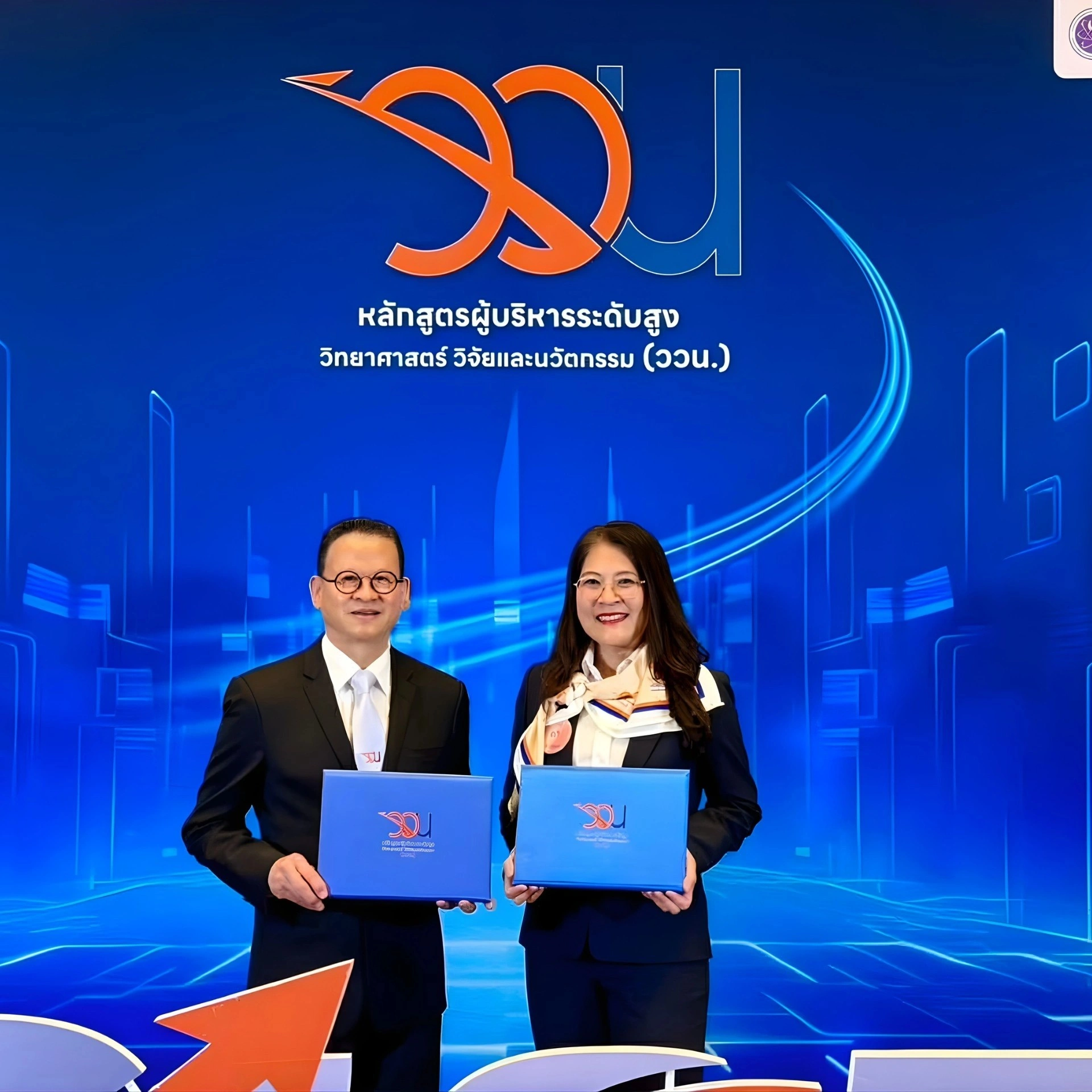
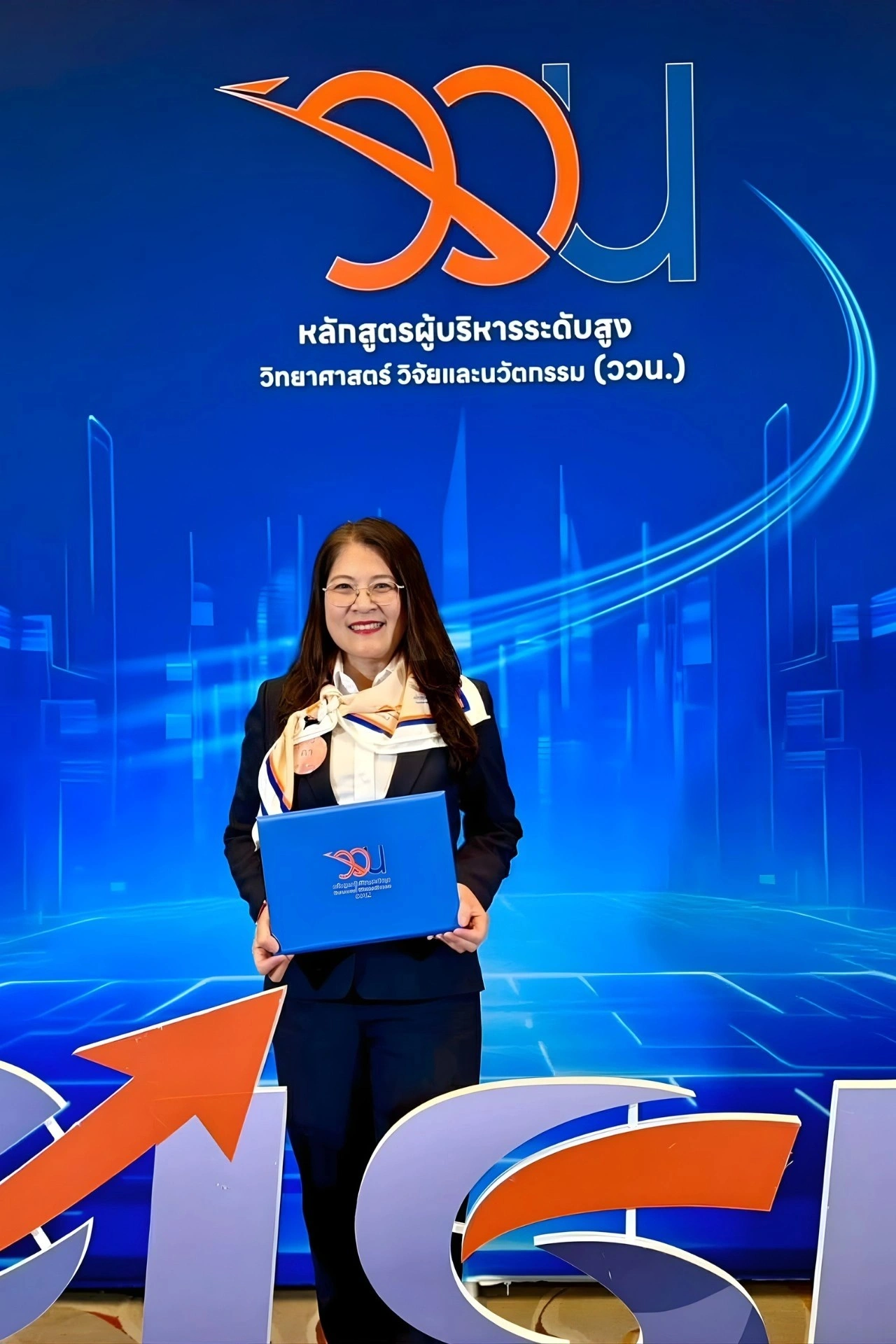
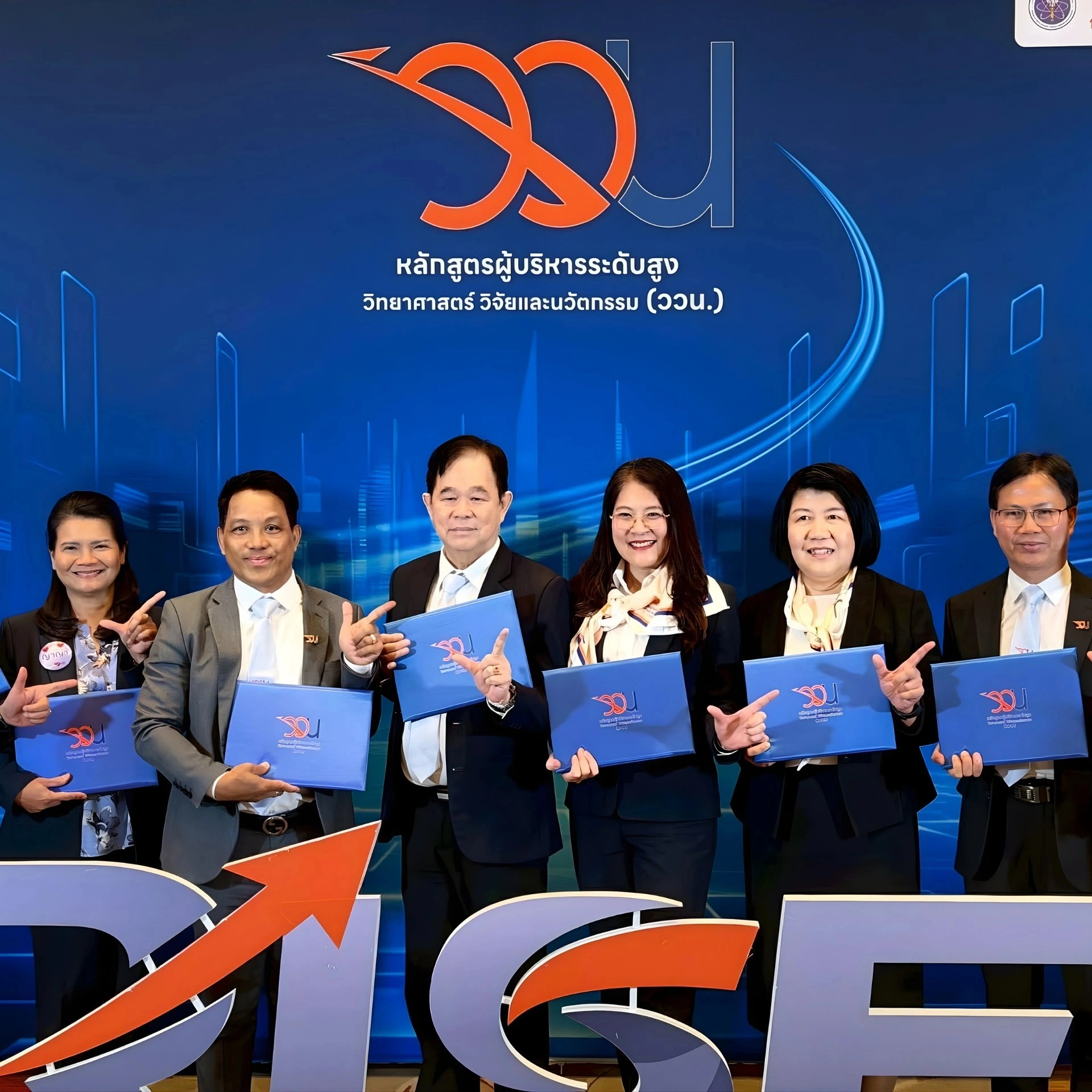
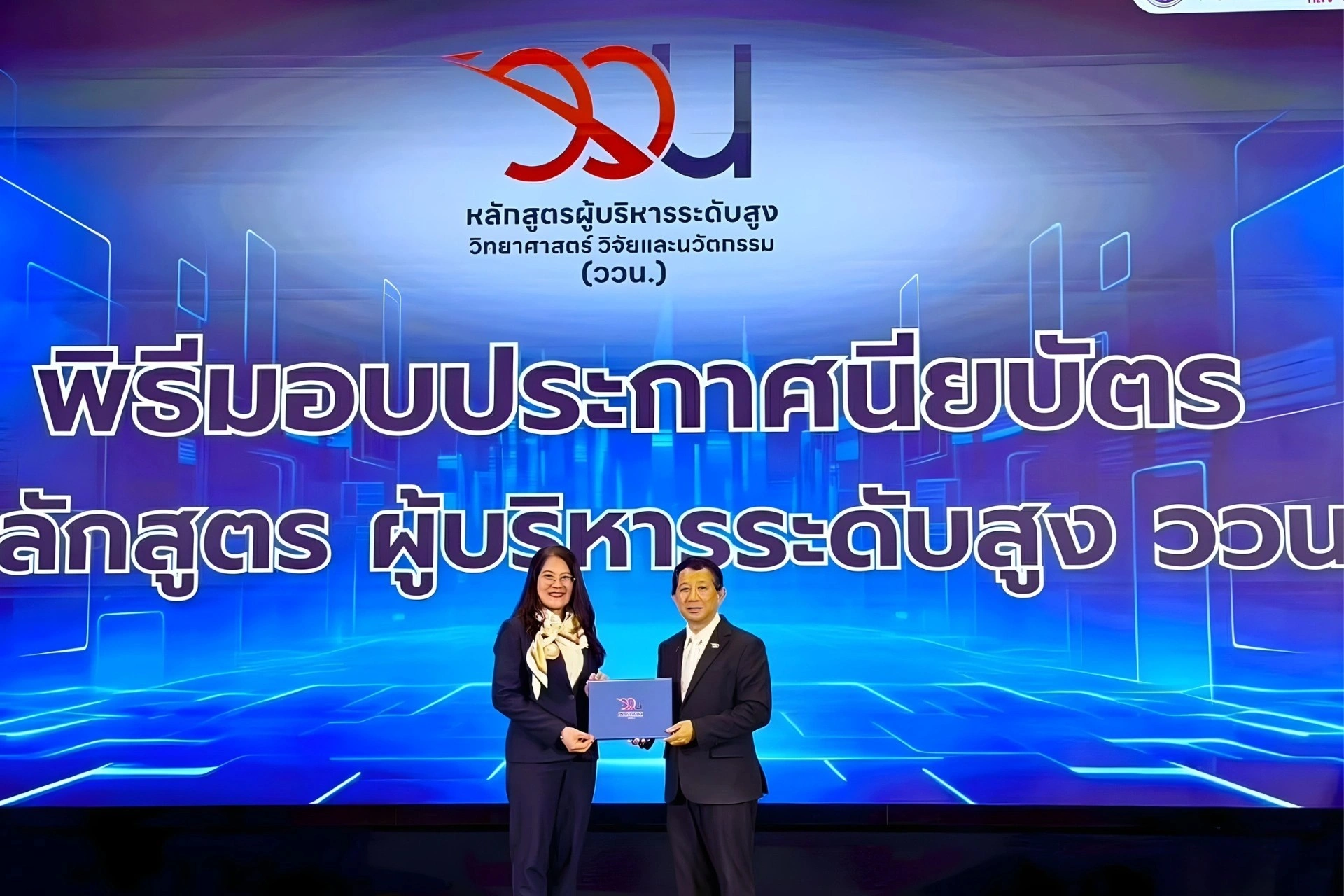
The President of Kamphaeng Phet Rajabhat University receives a certificate for the Advanced Management Program in Science, Research and Innovation (AMRI), Batch 1.
KPRU NEWS: Closing Ceremony and Certificate Presentation for the 1st Cohort of the Advanced Executive Program in Science, Research and Innovation (AEPRI).
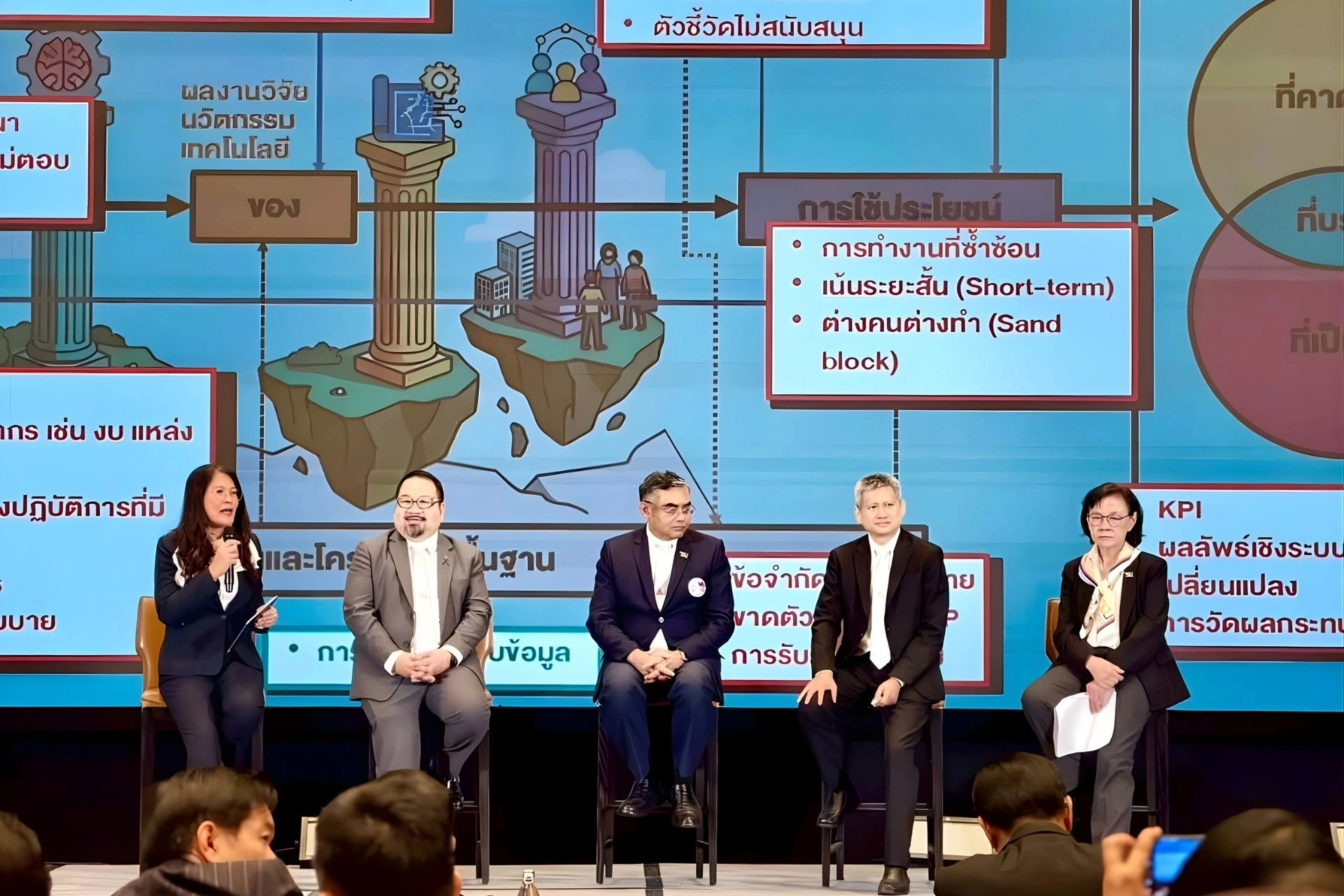
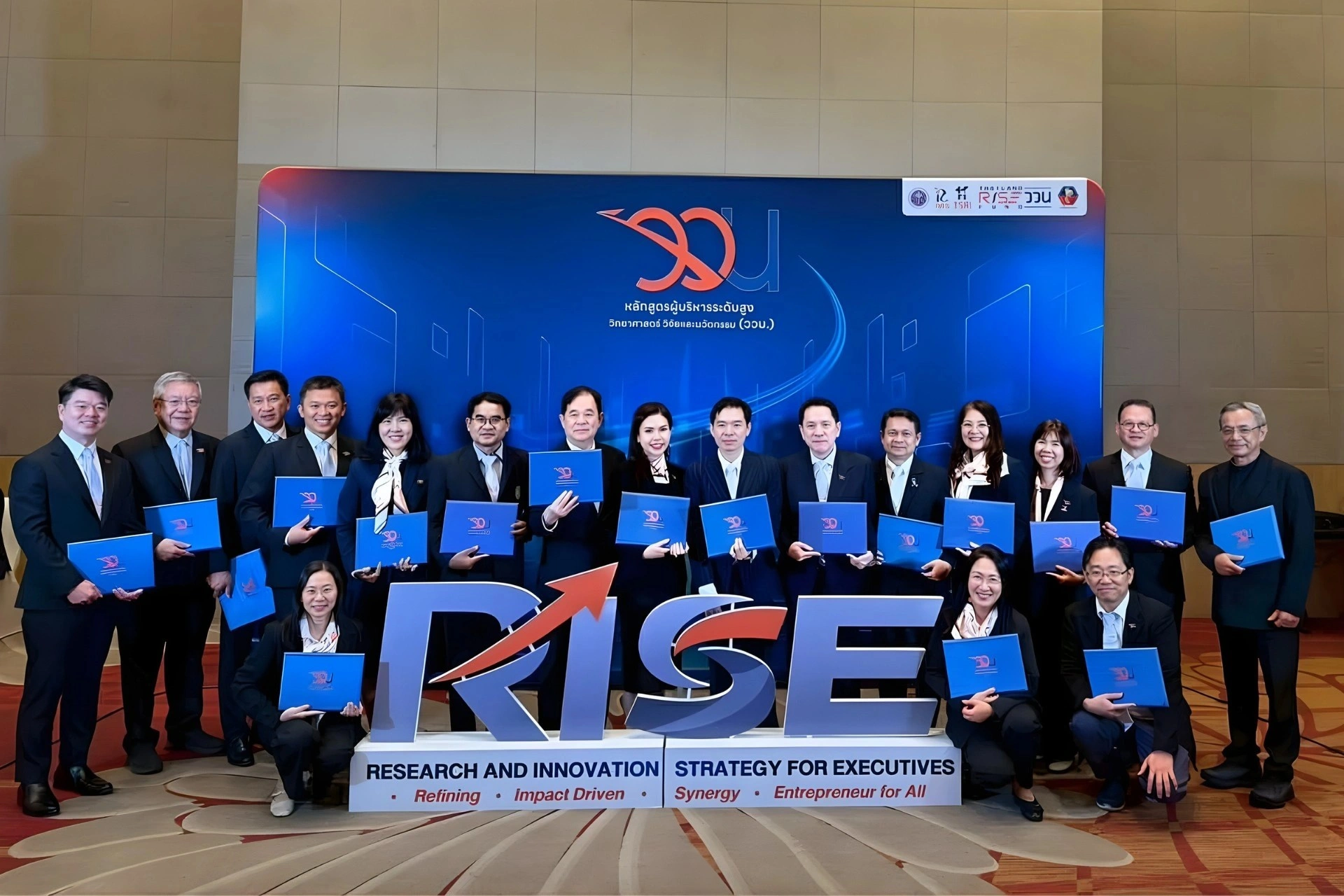
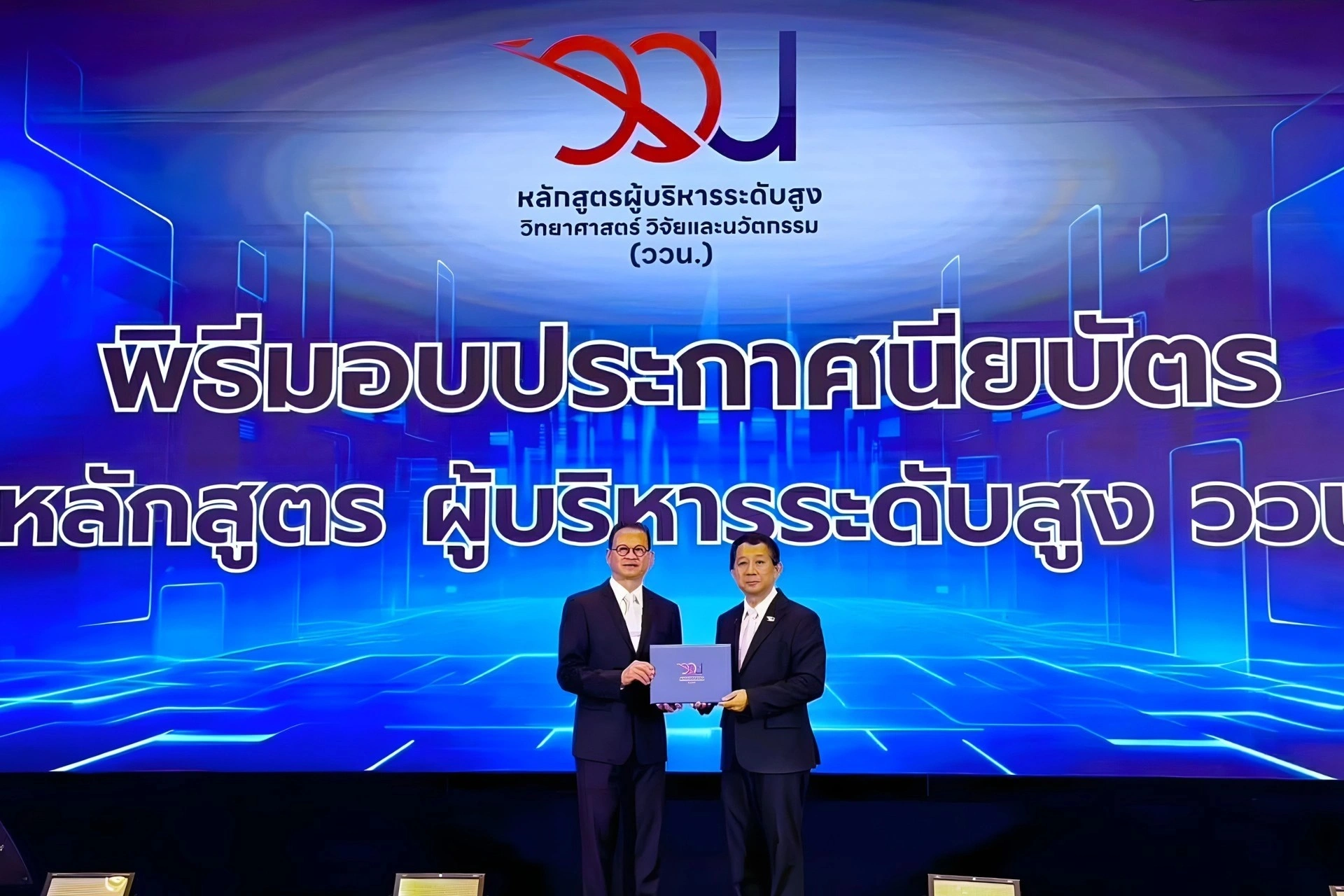
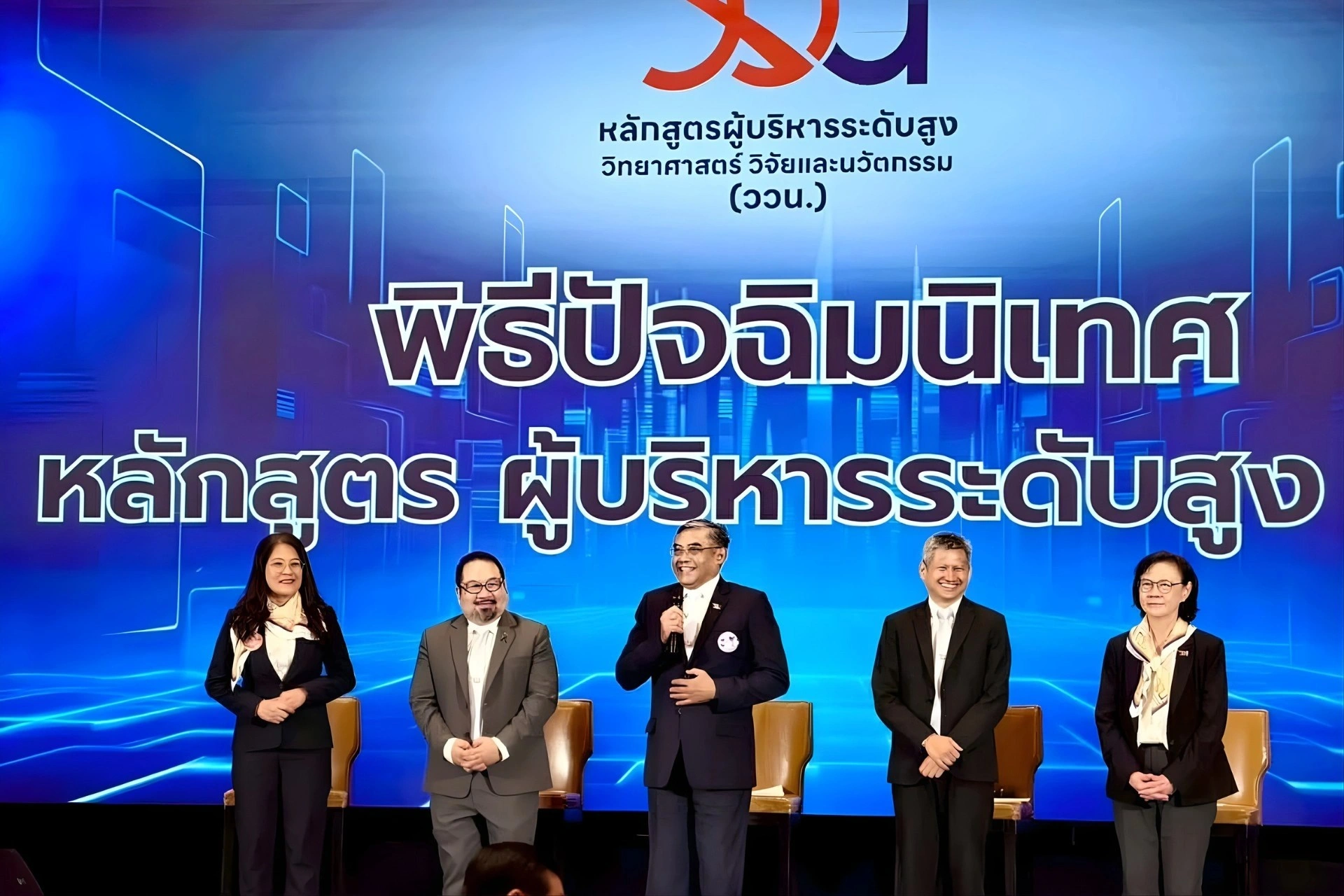
On March 20, 2026, at the Ballroom, 3rd Floor, Marriott Hotel Bangkok, Assistant Professor Dr. Priyanuch Promphasit, President of Kamphaeng Phet Rajabhat University, and Mr. Montchai Rungcharnchai, Chairman of the University's Science, Research and Innovation Promotion Committee, attended the closing ceremony and certificate presentation for the 1st cohort of the Advanced Executive Program in Science, Research and Innovation (AEPRI). During the event, Assistant Professor Dr. Priyanuch Promphasit, President, represented all 90 participants in presenting the AEPRI 1 Policy Recommendation and received feedback from experts. Professor Emeritus Dr. Sirirerk Songsiwilai, Chairman of the Science, Research and Innovation Promotion Committee, presided over the ceremony and offered congratulations, presenting certificates to all participants. The ceremony was attended by Professor Dr. Sompong Khlaynongsuwan, Director of the National Science and Technology Development Agency (NSTDA), and distinguished guests from the research and innovation sector in Thailand.
The "Executive Program in Science, Research and Innovation (SRI) Batch 1" aims to create a strategic learning space for executives from various sectors to enhance their in-depth understanding of policies, directions, and mechanisms for driving national development through science, research, and innovation. It also aims to connect policy to practice and collectively improve the efficiency of the country's SRI management system overall. Professor Emeritus Dr. Sirirerk Songsiwilai, Chairman of the National Science, Research and Innovation Council (NSTC), spoke about the role of the SRI system in driving national development towards sustainability. He pointed out that the system's operational structure requires the cooperation of all sectors, from policy and plan formulation and budget allocation to research and innovation management and the practical application of research and innovation results. Therefore, the next phase of SRI system development focuses on shifting from a fragmented approach to a thematic and targeted approach, along with adjusting budget management to be more continuous and flexible. To support the creation of measurable outcomes in the dimensions of R&D investment, knowledge creation, commercialization, and collaboration across all sectors, the key to driving the R&D system is having a clear systemic ownership, strengthening human and organizational capabilities, utilizing budgets to create real impact, and learning from outcomes for continuous improvement. This ensures that funding, personnel, research, and outcomes move in a aligned and concrete direction.
Professor Dr. Sompong Khlaynongsuang, Director of the National Science and Technology Development Agency (NSTDA), stated that NSTDA recognizes the importance of raising awareness and understanding of national R&D policies, strategies, and plans. If executives can learn and understand the strategic direction alongside policies and strategies, it will enhance research management and maximize the utilization of research and innovation, in line with the objectives of the R&D fund. The R&D Executive Training Program is therefore a crucial mechanism for coordinating direction and creating synergy for driving research and innovation among senior executives from over 300 funding agencies and partner networks. This systemic collaboration will directly impact the efficiency of budget allocation and management. To maximize benefits for national development, NSTDA expects the Advanced Research and Innovation Executive Program to serve as a learning platform, a networking center, and a starting point for new collaborations between agencies and partners across all sectors. This will collectively drive the country's research and innovation system forward in a unified direction and create sustainable long-term results for Thailand.
KPRU NEWS: Closing Ceremony and Certificate Presentation for the 1st Cohort of the Advanced Executive Program in Science, Research and Innovation (AEPRI).
On March 20, 2026, at the Ballroom, 3rd Floor, Marriott Hotel Bangkok, Assistant Professor Dr. Priyanuch Promphasit, President of Kamphaeng Phet Rajabhat University, and Mr. Montchai Rungcharnchai, Chairman of the University's Science, Research and Innovation Promotion Committee, attended the closing ceremony and certificate presentation for the 1st cohort of the Advanced Executive Program in Science, Research and Innovation (AEPRI). During the event, Assistant Professor Dr. Priyanuch Promphasit, President, represented all 90 participants in presenting the AEPRI 1 Policy Recommendation and received feedback from experts. Professor Emeritus Dr. Sirirerk Songsiwilai, Chairman of the Science, Research and Innovation Promotion Committee, presided over the ceremony and offered congratulations, presenting certificates to all participants. The ceremony was attended by Professor Dr. Sompong Khlaynongsuwan, Director of the National Science and Technology Development Agency (NSTDA), and distinguished guests from the research and innovation sector in Thailand.
The "Executive Program in Science, Research and Innovation (SRI) Batch 1" aims to create a strategic learning space for executives from various sectors to enhance their in-depth understanding of policies, directions, and mechanisms for driving national development through science, research, and innovation. It also aims to connect policy to practice and collectively improve the efficiency of the country's SRI management system overall. Professor Emeritus Dr. Sirirerk Songsiwilai, Chairman of the National Science, Research and Innovation Council (NSTC), spoke about the role of the SRI system in driving national development towards sustainability. He pointed out that the system's operational structure requires the cooperation of all sectors, from policy and plan formulation and budget allocation to research and innovation management and the practical application of research and innovation results. Therefore, the next phase of SRI system development focuses on shifting from a fragmented approach to a thematic and targeted approach, along with adjusting budget management to be more continuous and flexible. To support the creation of measurable outcomes in the dimensions of R&D investment, knowledge creation, commercialization, and collaboration across all sectors, the key to driving the R&D system is having a clear systemic ownership, strengthening human and organizational capabilities, utilizing budgets to create real impact, and learning from outcomes for continuous improvement. This ensures that funding, personnel, research, and outcomes move in a aligned and concrete direction.
Professor Dr. Sompong Khlaynongsuang, Director of the National Science and Technology Development Agency (NSTDA), stated that NSTDA recognizes the importance of raising awareness and understanding of national R&D policies, strategies, and plans. If executives can learn and understand the strategic direction alongside policies and strategies, it will enhance research management and maximize the utilization of research and innovation, in line with the objectives of the R&D fund. The R&D Executive Training Program is therefore a crucial mechanism for coordinating direction and creating synergy for driving research and innovation among senior executives from over 300 funding agencies and partner networks. This systemic collaboration will directly impact the efficiency of budget allocation and management. To maximize benefits for national development, NSTDA expects the Advanced Research and Innovation Executive Program to serve as a learning platform, a networking center, and a starting point for new collaborations between agencies and partners across all sectors. This will collectively drive the country's research and innovation system forward in a unified direction and create sustainable long-term results for Thailand.
อัลบั้มภาพ
ข่าวที่เกี่ยวข้อง